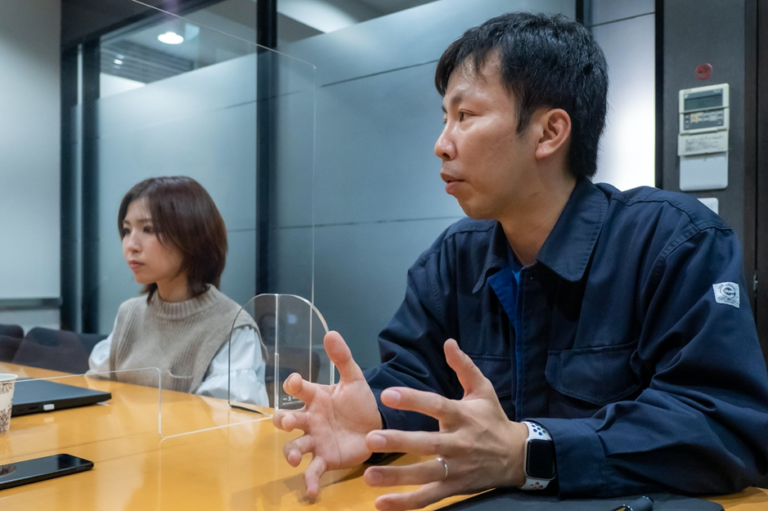
.jpg)
Industrial site digitization is entering a new phase.
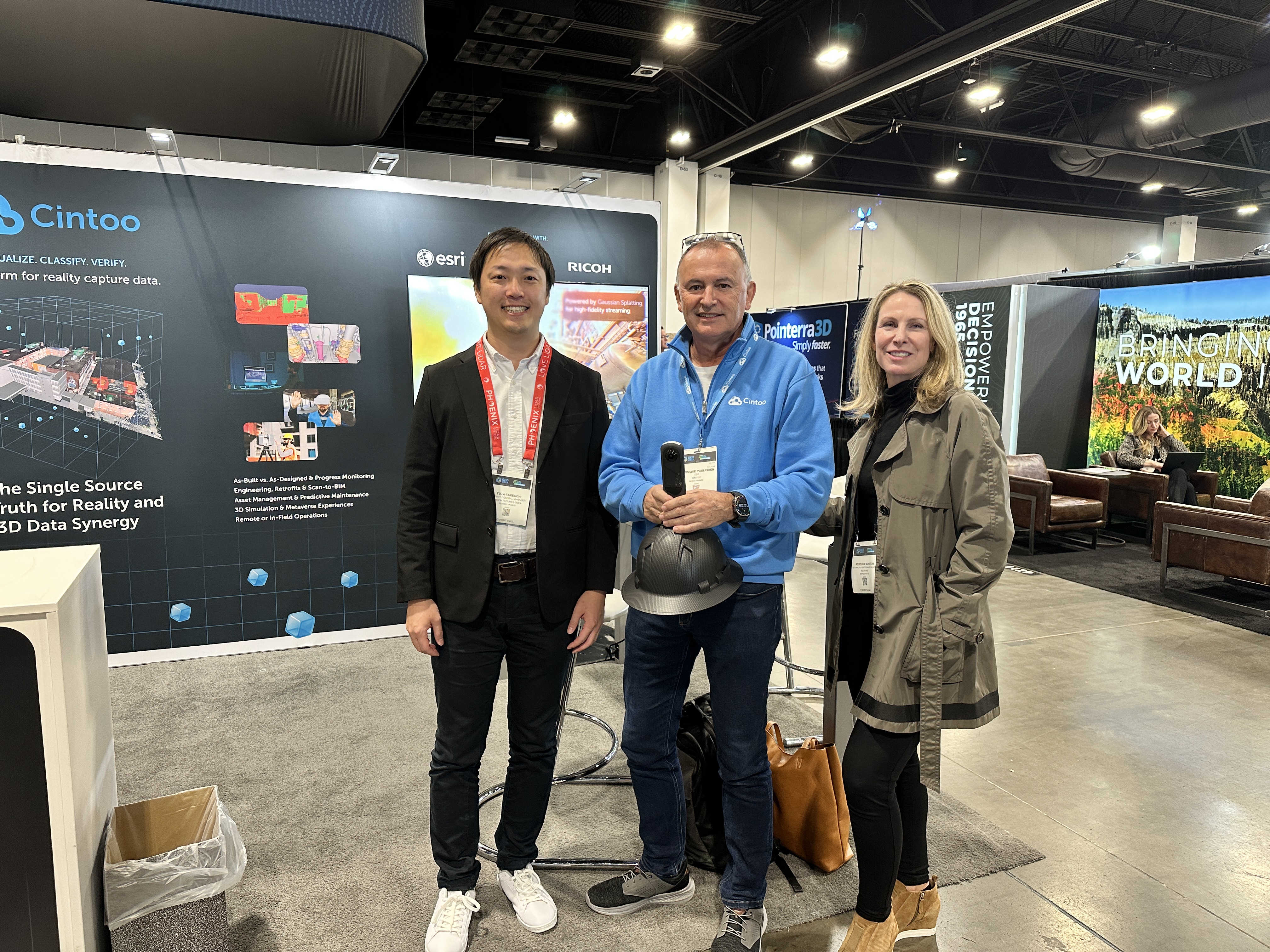
RICOH and Cintoo have announced a strategic collaboration to natively integrate 360° capture into industrial 3D workflows with the launch of the 360 Edition.
This initiative addresses a critical challenge for owners and operators of complex infrastructure: efficiently connecting field capture to professional 3D environments and digital twin platforms.
Native Integration of 360° Video into 3D Environments
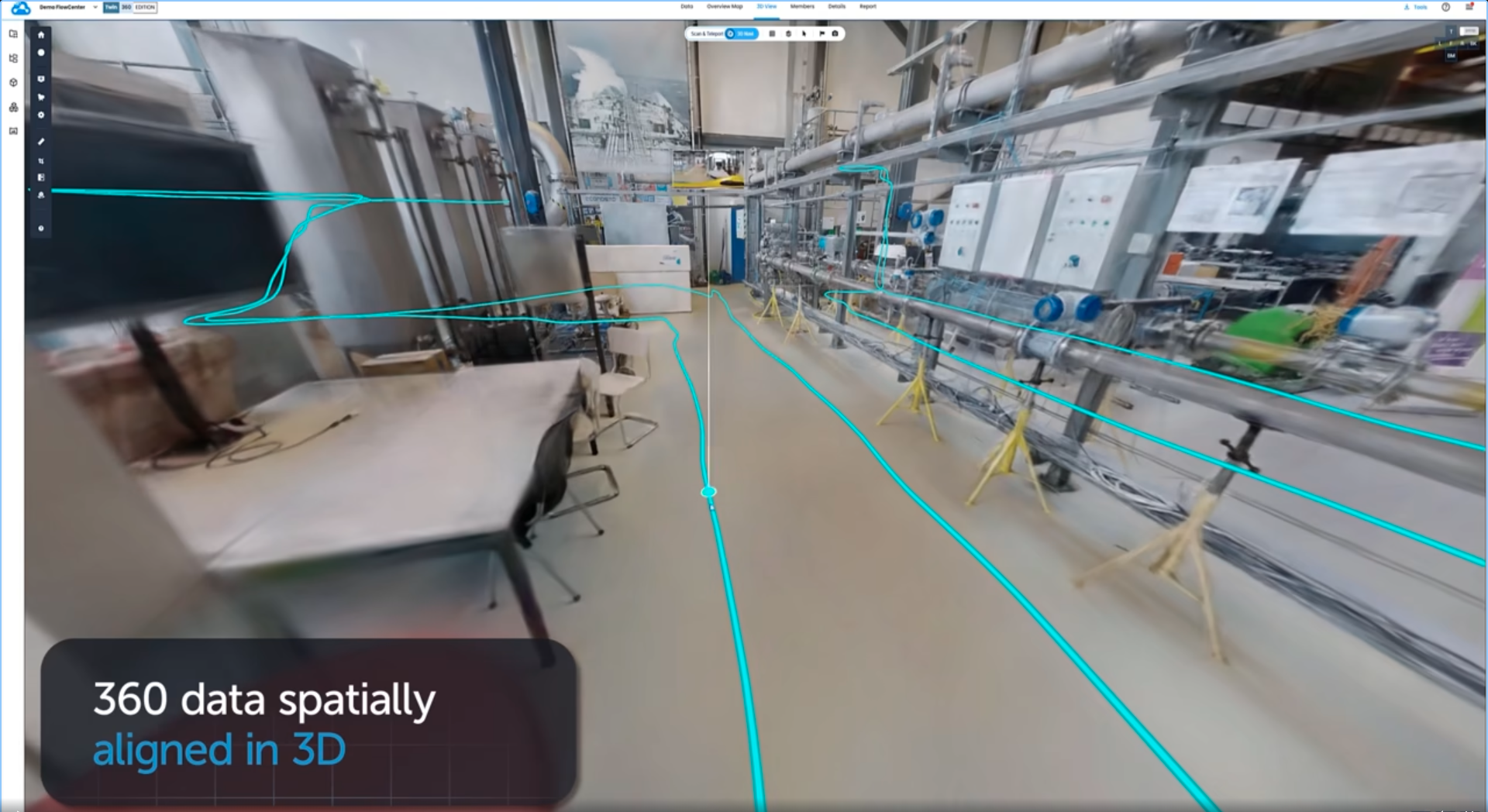
Cintoo’s 360 Edition brings together, within a single fully synchronized environment:
- 360° video captured with RICOH cameras,
- 3D scans,
- BIM and CAD models.
The goal is straightforward: eliminate data silos and simplify access to information. Teams no longer need to move between disconnected systems or manually align datasets. Information is centralized, synchronized, and continuously accessible—from the field to the cloud.
As Dominique Pouliquen, CEO of Cintoo, explains:
“By bringing together RICOH 360 data, 3D scans, and design models in a unified 3D environment, we enable more teams to adopt advanced 3D workflows without added complexity.”
This approach lowers technical barriers and accelerates the adoption of industrial 3D workflows across organizations.
The Complementary Strength of the Cintoo Platform and RICOH THETA Cameras
The collaboration is built on strong technological synergy.
On one side, Cintoo’s 3D platform structures and synchronizes data from scans and digital models.
On the other, RICOH THETA cameras deliver high-resolution 360° capture that is fast, reliable, and designed for demanding industrial environments.
Compact, easy to deploy, and well suited for confined or hard-to-access areas, RICOH THETA cameras enable efficient site documentation without disrupting ongoing operations.
This native integration ensures that 360° video is not treated as static visual documentation, but as an active component within the 3D workflow.
From Field Capture to Digital Infrastructure
RICOH’s contribution to the 360 Edition extends well beyond hardware.
Through its cloud-connected imaging ecosystem and synchronization technologies, RICOH serves as the integration layer between on-site capture and enterprise digital systems.
A 360° capture is transformed into structured, interoperable data that can be directly leveraged within industrial digital twin platforms.
With an automated field-to-cloud workflow, captured content becomes a true digital asset embedded in business processes—rather than isolated visual files.
By combining ease of capture, automated data structuring, and native interoperability, the RICOH × Cintoo collaboration enables:
- more frequent industrial site documentation,
- more reliable asset verification,
- scalable deployment of digital twins across multi-site operations.
A Strategic Initiative for Industrial Digital Transformation
For RICOH, this collaboration reflects a broader vision for advancing digital transformation across construction, manufacturing, and infrastructure sectors.
As Akio Inaba, President of RICOH Futures EMEA and Head of the Smart Vision Business Center at RICOH, states:
“We are pleased to collaborate with Cintoo on the launch of the 360 Edition. By continuously transforming field data into precise and actionable digital assets, this solution goes far beyond visualization—it supports operational decision-making, process optimization, and long-term knowledge retention. For RICOH, the 360 Edition represents a strategic initiative to embed 360 data at the core of our customers’ business processes and accelerate their digital transformation across construction, industry, and infrastructure.”
This statement clearly reflects the shared ambition of both companies: to establish 360° capture as a core data layer within industrial 3D workflows and digital twin environments.
Toward a New Generation of Industrial 3D Workflows
With the 360 Edition, RICOH and Cintoo are laying the groundwork for tighter integration between field reality and digital models.
360° video, 3D scans, and BIM/CAD models are no longer parallel information streams, but synchronized components within a unified 3D environment.
This strategic collaboration marks an important milestone in the evolution of industrial 3D workflows—empowering organizations to transform field capture into a driver of operational performance and long-term digital transformation.



.svg)